Recipe Description:
Jewish dessert history is often divided between Ashkenazi and Sephardi traditions. The Ashkenazi sweets are drier and cake-like and the Sephardic desserts are often sticky. After generations of geographic separation between the two groups, today, for the most part, our communities include families with both Eastern European and North African or Middle Eastern members.
This intermarriage has often resulted in meals with blended traditions. As for desserts, however, I have found that they typically fall within one camp or another. Today I present the marriage between Ashkenazi and Sephardi dessert traditions.
Baklava, a dessert of layered filo dough and nuts, originated in Turkey and was spread throughout the Middle East by the Ottoman Empire. It was originally considered the dessert of only the rich, as nuts and honey were pricey. The first documented recipe of a similar dessert was in the year 1330. Today it is part of the cuisine of the Arab world, the Balkans, as well as Iran, Greece, Afghanistan, Georgia, Bulgaria, Albania, and beyond.
Rugelach originated from eastern European Ashkenazi Jews and was likely brought to America from Hungarian or Polish immigrants. Crescent-shaped pastries are said to have been created to celebrate the defeat of the Turks in Vienna, but most historians believe that the dessert dates back earlier. The Yiddish name means twists. Rugelach are made with yeast or cream cheese and are shaped either into crescents or small squares. They have become a mainstream cookie in a large part of America, and you can find them in most delis and bakeries, whether Jewish or not.
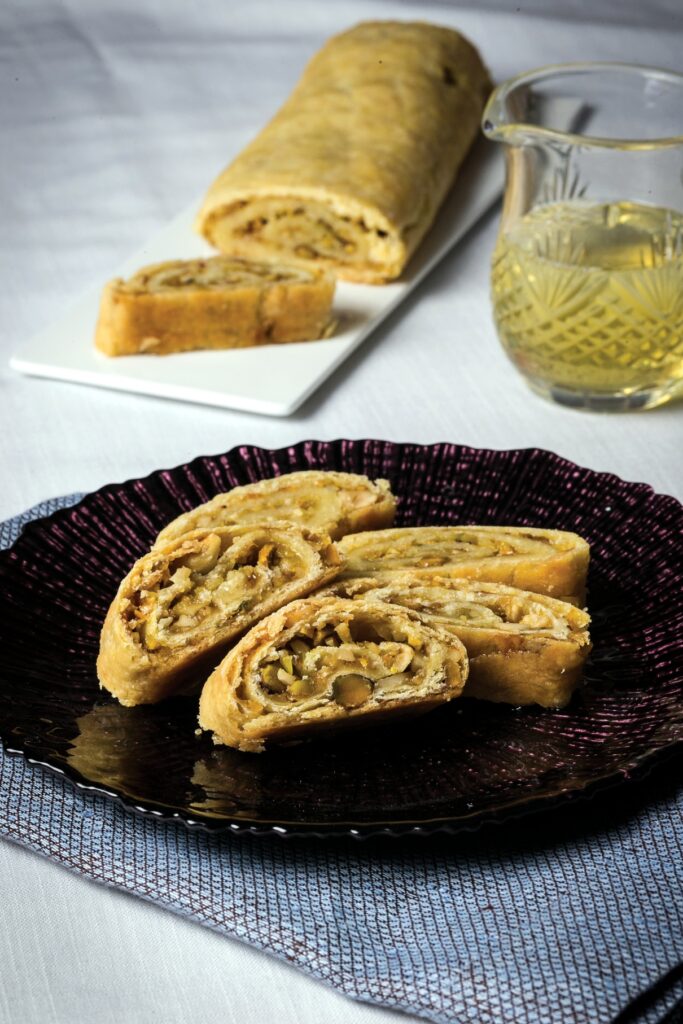
There are two ways to make rugelach. The time-consuming way is to roll out circles of dough, fill, and then cut triangles and roll them up one at a time, shaping them into a crescent. The easier option is to roll out rectangles of dough, fill as desired and then roll up into a long roll, bake, and then slice them after baking. Some bakeries slice them into squares before baking. The filling more easily stays inside the rolls of dough and it is so much faster to prepare a large amount than to shape each cookie individually.
Some rugelach get dry; avoid that by serving them with the syrupy glaze. If it is your minhag not to eat the nuts listed below on Rosh Hashanah, see the variations for more ideas.
Makes 60 to 70 pieces
Check out our complete collection of Rosh Hashanah recipes for mains, sides, soups, desserts, and more inspiration for the holiday.





Photos from Our Community
See how these recipes turned out in real kitchens. Photos from home cooks will appear here as they're shared.
Tell Us How It Went: Share Your Experience
Your review could help someone decide what's for dinner tonight. Log in to join the conversation.
Log in to join the discussion0 Comments
Do you want to rate this post?
Edit your rating
Choose a new star rating and save it.
Moderation
Report
Kosher Comments
Kosher Comments
Add a link
Posting comment
Your comment will be posted in a moment...