

Shailah of the Week by Rabbi Zvi Nussbaum
Rabbinic Coordinator, Kosher Hotline Administrator for the Orthodox Union
The obligation for Kiddush only begins after davening when it is before the Shabbat meal.
There are two opinions among Rishonim whether a woman is required to daven Shacharit every day, or if it is sufficient for her to recite a short prayer (see Mishna Berura 106:4). Shemirat Shabbat K’hilchata (52:13) writes that if a woman does not daven Shacharit, but recites a short prayer in the morning, the short prayer is equivalent to davening Shacharit vis-a-vis the requirement for Kiddush. Once she has said her short prayer, she is obligated to recite Kiddush, and may no longer eat or drink until she has fulfilled the requirement of Kiddush.
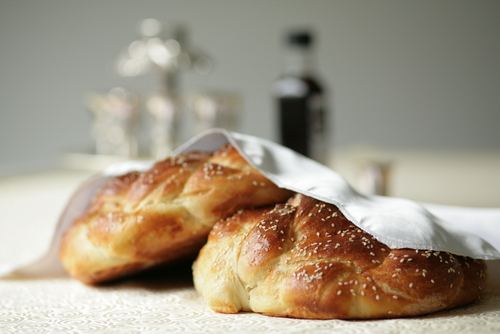
If a woman is feeling weak and does not have grape juice available, some poskim are lenient to allow her to eat in the morning before hearing Kiddush. (Teshuvat Minchat Yitzchak 4:28[3]). This is because some Rishonim exempt a woman from Kiddush on Shabbat morning. Though we do not normally follow this view, we can rely on it in situations of necessity.
Rav Moshe Feinstein, zt”l, is of the opinion that a married woman is not obligated to recite Kiddush before her husband has davened. (Iggerot Moshe, volume 4, 101:2). Accordingly, if a woman has completed her morning prayers before her husband has davened, she may eat a full meal. Shemirat Shabbat Kehilchata (52:46) notes that Rav Shlomo Zalman Auerbach, zt”l, disagreed with Rav Moshe, zt”l, on this latter point.


Photos from Our Community
See how these recipes turned out in real kitchens. Photos from home cooks will appear here as they're shared.
Tell Us What You Think
Your review could help someone decide what's for dinner tonight. Log in to join the conversation.
Log in to join the discussion0 Comments
Do you want to rate this post?
Edit your rating
Choose a new star rating and save it.
Moderation
Report
Kosher Comments
Kosher Comments
Add a link
Posting comment
Your comment will be posted in a moment...